Your HR department wastes countless hours on tasks that ought to be completed within a few minutes. Leave applications become part of your inbox, attendance reports remain in spreadsheets, and employee documents stay inside folders that have never been systematically organized.
Even when your HR department manages to solve one issue, they face two more before they know it, and that is not a problem of incompetent staff but a matter of inefficient systems.
Our modern HRMS solutions provide you with the necessary instruments to stop wasting time on paper and begin doing actual work. And if you still do not know how to get started, we recommend you to check out our guide to HR platform selection.
Table of Contents
ToggleKey Takeaways
- HR software centralizes employee data, leave, attendance, and payroll into one system.
- Automated onboarding and performance tracking improve both employee experience and manager visibility.
- Payroll integration eliminates errors caused by disconnected attendance and leave data.
- HR software has real limitations, including that poor setup creates new problems regardless of how good the tool is.
Why HR Teams Keep Falling Behind
Most HR teams struggle because their tools were not built for current needs. A company with 50 employees cannot rely on the same spreadsheets it used with 10.
Workforce planning fails when data is scattered across systems, making it hard to spot trends or track burnout. HR digital transformation means replacing tools that slow your team down, not adding more software.
The Hidden Cost of Manual Processes
When HR is manual, errors compound predictably. A missed attendance entry creates a wrong payroll calculation; that mistake creates an angry employee, and trust erodes quietly until it shows up in your turnover numbers.
HR Operations Software fixes this by creating one source of truth where managers, employees, and HR all see the same data and that single change removes a surprising number of daily conflicts.
What Modern HR Software Actually Does
People generally think of Workforce Management Software as an advanced version of their current system, but what it actually does is automate all processes related to HR management by replacing the manual processes that depend on someone’s memory.
The real HR management platform takes care of the entire process starting from when the job offer is accepted to the last day of the record keeping, tracking time, leave processing, and payroll.
Core Features Worth Understanding
Good Human Capital Management Software gives your team three things that matter most:
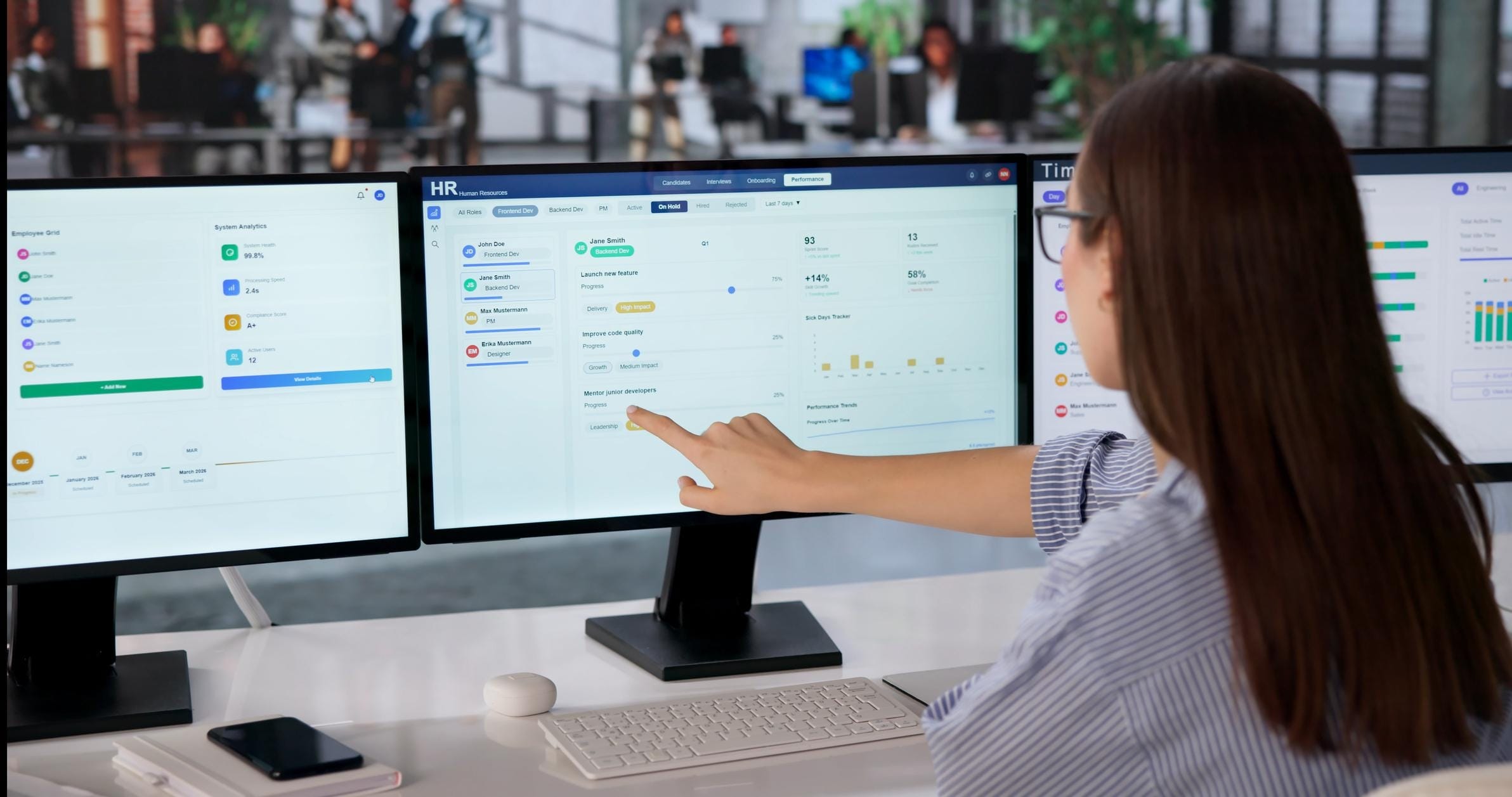
- Real-time dashboard that provides attendance figures, leave balance details, and performance metrics without generating a single report manually.
- Access restricted to roles, so that managers can see their own reports, while keeping sensitive information regarding employees secure.
- Automated process that will take care of approvals, reminders, and document gathering without any follow-ups from the HR department.
Cloud vs. On-Premise: What Actually Matters
Cloud HR Software requires no servers for IT to maintain, updates automatically, and employees can access it from anywhere. Enterprise HR Software solutions offer both options, but for most mid-size businesses, cloud is faster to set up and easier to maintain.
Fixing Onboarding and Employee Records
The employee onboarding software organizes the entire procedure to ensure that signatures are done online, system access is set from day one, and there is no need for HR to chase any individual, as unorganized onboarding is one of the biggest reasons why new employees leave within the first three months.
If you do not have employee records management software, your list of employees will be only as updated as the last person to touch it. This will pose a risk of non-compliance, but having a live list of employees will ensure updates throughout.
Why Centralized Records Change Everything
- Centralized employee information removes duplication errors that come from maintaining multiple separate records
- Digital records make compliance checks and audits significantly faster for your HR team
- Employee tracking for certifications and contract renewals runs automatically instead of depending on someone’s calendar reminder
Automating Leave and Attendance
The process of handling leave requests, reviewing balances, and seeking approvals takes up a significant amount of time in a week but offers no strategic benefit for the organization at all. The automated Leave Management System facilitates the complete process of requesting leaves, approving in a single click, and updating balances.
The attendance management system eliminates the need for manual submission of timesheets and makes use of attendance collected using biometric tools or applications or even through websites. All the information gets directly fed into payroll, from where mistakes previously occurred.
Performance Management and Employee Engagement
Annual reviews stored in email do not improve performance.
- Performance Management Software: supports regular goal tracking, check-ins, and feedback that managers and employees can access anytime.
- Employee Engagement Software: uses surveys and recognition tools to spot disengagement early. Real performance data also helps make fairer promotion decisions.
Payroll Integration and HR Automation
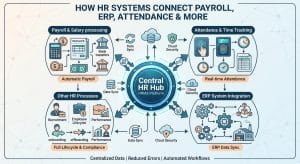
Payroll Integration connects attendance, leave, and employee data directly to payroll so overtime and unpaid leave update automatically, removing errors caused by manual data transfers.
HR automation software automates the entire HR process, from offer letter till the renewal of the contract, without the need for manual tracking. Employee self-service software will enable employees to get access to payslips and leave balance, which reduces HR enquiries.
Integration of recruitment management software will ensure that newly hired employee details flow into onboarding automatically.
HR Software Comparison
| Feature | Without HR Software | With HR Software |
| Leave Requests | Email chains, manual updates | One-click submission and approval |
| Attendance Tracking | Paper timesheets or spreadsheets | Automated, real-time digital records |
| Payroll Accuracy | Manual cross-referencing, frequent errors | Direct integration with fewer errors |
| Employee Onboarding | Ad-hoc checklists, missed steps | Structured digital workflow from day one |
| Performance Reviews | Annual, stored in email | Ongoing, trackable, and data-driven |
| Employee Records | Scattered across folders and systems | Centralized and access-controlled |
| HR Reporting | Manual data pulls that take hours | Real-time analytics dashboard |
An Honest Warning Before You Commit
Implementation is harder than the software itself. If your data is messy before migration, it stays messy after, and if managers do not use the system, HR ends up running two systems at once.
HR Software Implementation takes time and internal buy-in, so ask vendors who handle data migration, what support includes, and how issues are resolved. Not every Business HR Software feature fits a small team, and the right Digital HR Solutions only work when you start with a clear plan and realistic expectations.
Conclusion
The companies that benefit the most from HR software are not the companies that invested in the most elaborate system; they are the companies that identified their problems first and allowed their teams to adjust to them.
In order to continue, you need to identify your top five HR problems and select a software solution that tackles each problem individually. You should have ownership for implementation internally before committing to any software company and have a clear goal for what needs to be accomplished within 90 days.
Your HR workflow system will evolve as you evolve and leave your team time to deal with more complex tasks so let’s go back to basics.
Frequently Asked Questions
1. What are the key features of a modern HR Management System?
The modern HRMS integrates all the HR functions in one system. They include employee management, vacation, attendance, payroll, performance and self-service features. The system provides real-time reporting and user access.
2. Can HR software integrate with payroll, attendance, and ERP systems?
Yes, because the majority of HR systems are integrated with payroll systems, attendance systems, and ERP systems. The system eliminates manual data input and errors in payroll processing.
3. How does HR software improve employee engagement and retention?
The system makes it easy for employees to track their goals and achievements. Managers may conduct surveys and meetings to discover any issues and retain the employees.
4. Is HR software worth the investment for small and growing businesses?
Only if it is suited to their needs and size. Start with simple functionalities such as record keeping, time off, attendance, and payroll.
5. What are the biggest challenges businesses face when implementing HR software?
Problems might arise due to poor quality of existing data, non-utilization by managers, and poor planning. Good customer support and company responsibilities will prevent those problems.